
A mining operator in Serbia was experiencing a critical issue: fuel pump and injector life had dropped to 50% below expected levels, putting significant pressure on maintenance costs and overall profitability.
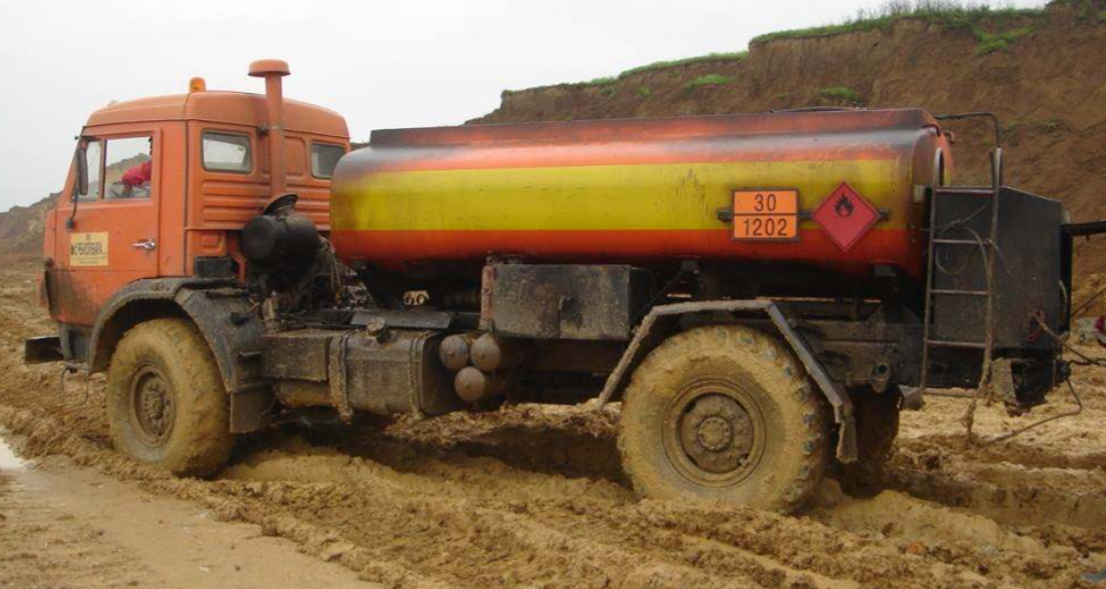
With diesel consumption at approximately 90,000 litres per week, even small inefficiencies were being amplified across the operation. Fuel was stored in a bulk tank and distributed daily via a mobile tanker, but a site assessment quickly revealed a key risk — there was no filtration in place at either stage.
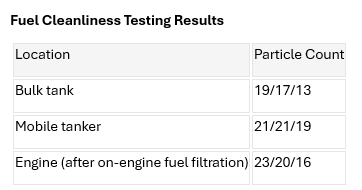
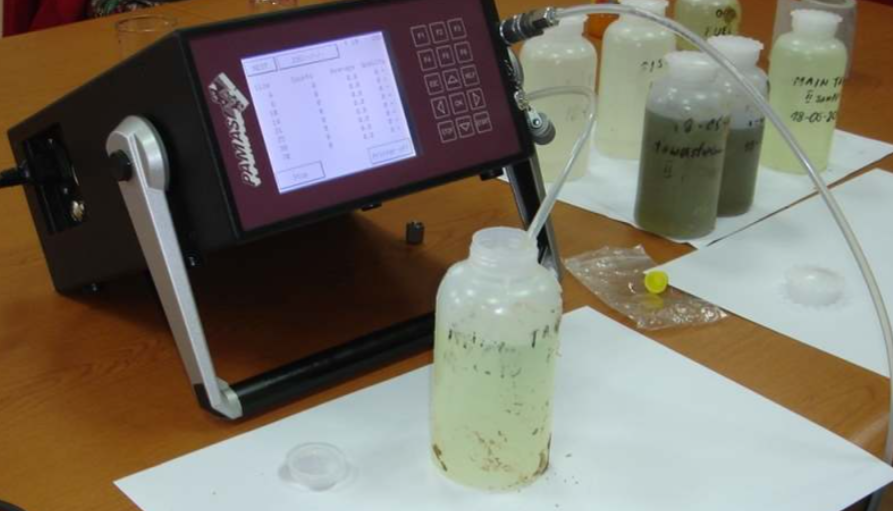
Fuel sampling confirmed the impact: contamination levels increased progressively throughout the handling process, reaching highly damaging levels by the time fuel entered the engine.
At the point of injection, fuel cleanliness had degraded to 23/20/16, compared to the recommended ISO 4406 standard of 12/9/6 — a level required to protect modern, high-pressure fuel systems. This gap exposed critical components to accelerated wear, directly driving the premature failures being observed.
Beyond contamination during handling, further risks were uncovered within the filtration system itself. A non-genuine separator bowl without a drain had been installed on the Fleetguard FH234 primary fuel filter, preventing the removal of water and debris. This allowed contaminants to accumulate and flow directly into the fuel system.
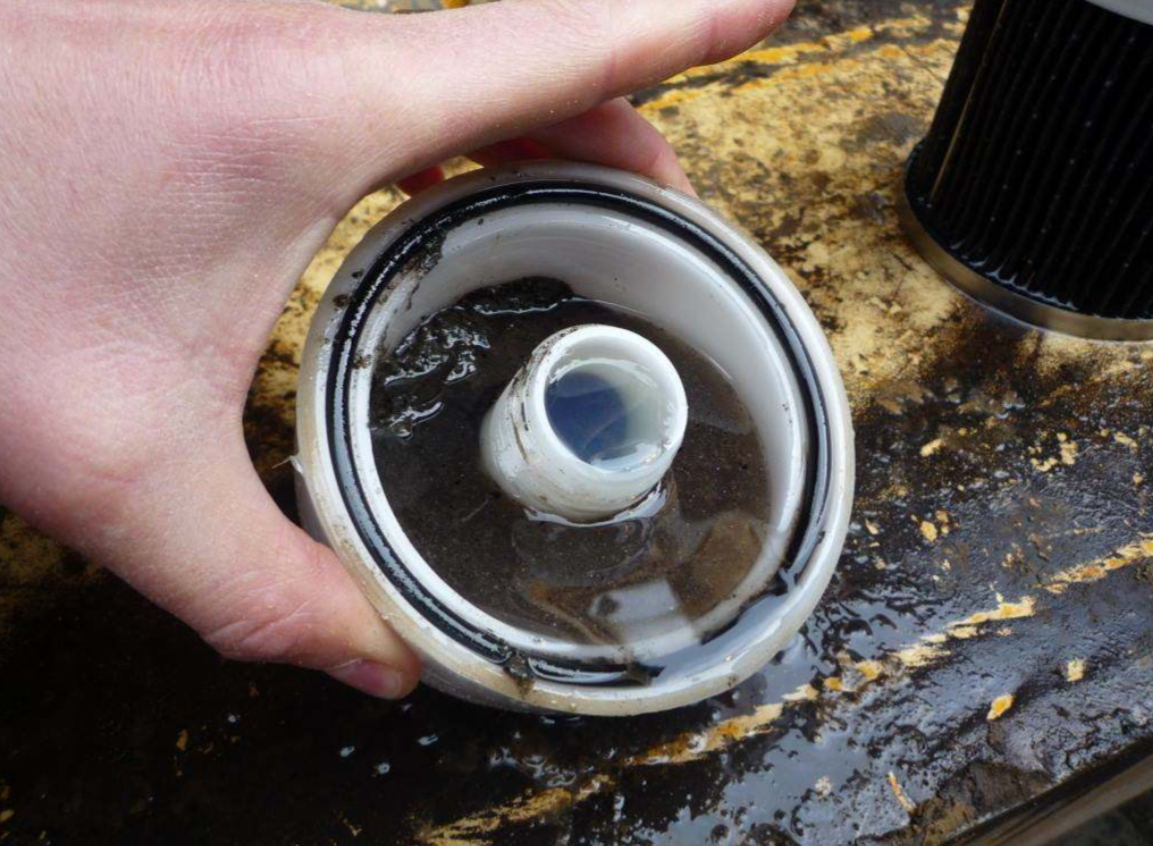
At the same time, a non-genuine on-engine filter had replaced the specified Fleetguard FF5644, weakening the final line of defence for critical fuel injection components.
Together, these issues created a perfect storm — poor fuel quality entering the system, combined with reduced filtration protection — resulting in increased wear, unplanned downtime, and higher operating costs.
The Solution
The Fleetguard technical team implemented a targeted, end-to-end solution focused on eliminating contamination risks and restoring system protection.
Immediate action delivered quick wins:
- A genuine FH234 separator bowl was reinstated, enabling daily removal of water and debris
- The correct Fleetguard FF5644 filter was reintroduced to restore baseline protection
- An upgrade to the FF5782 filter was recommended to further extend component life and improve overall system reliability
At the same time, improvements to site processes ensured long-term performance gains:
- The mobile tanker was cleaned and placed on a structured maintenance schedule
- Staff were trained on best practices to prevent contamination during refuelling
- Stage 0 filtration was introduced on the bulk storage tank and mobile tanker to stop contaminants at source
- Air breathers were recommended to eliminate airborne dirt ingress into tanks
Explore best practices for fuel cleanliness.
The Benefits
By addressing contamination at every stage of the fuel distribution process, the operator was able to significantly reduce risk across their entire fleet.
Key outcomes included:
- Extended component life – improved fuel cleanliness protects pumps and injectors from premature wear
- Reduced maintenance costs – fewer failures and longer service intervals
- Improved uptime – more reliable equipment performance in a demanding, high-dust environment
- Stronger operational control – better processes and filtration standards across the site
- No unnecessary spend – many improvements were achieved through process changes rather than additional cost
Importantly, the solution went beyond a short-term fix. By identifying gaps in both equipment and operational practices, Fleetguard helped the customer build a more resilient, efficient fuel management approach.
Although the operator had moved away from genuine parts, they returned to Fleetguard when performance issues arose — reinforcing the brand’s position as a trusted technical partner. The successful resolution not only restored system performance but also strengthened confidence in both the products and the long-term partnership.
As a result, the customer committed to ongoing filtration audits, ensuring sustained performance, cleaner fuel, and continued alignment with industry best practices.
Start optimizing your fuel system today and learn more about Fleetguard fuel filtration technologies.
*ISO 4406 12/9/6 in More Detail
Modern High-Pressure Common Rail (HPCR) engines require diesel with particle counts as low as 12/9/6, protecting injectors from tolerances as tight as 2-5 microns.
The code is evaluated across three particle sizes (in microns, ≥ 4 µm, ≥ 6 µm, ≥ 14 µm).
According to the ISO 4406:1999 standard, the designated levels correspond to the following particle count ranges per milliliter of fluid:
12 = 20 to 40 particles (sized ≥ 4 µm)
9 = 2.5 to 5 particles (sized ≥ 6 µm)
6 = 0.32 to 0.64 particles (sized ≥ 14 µm)
©2026 Atmus Filtration Technologies Inc. All rights reserved. Fleetguard® and ES Compleat® are registered trademarks owned by Atmus Filtration Technologies Inc. or its subsidiaries.
Important Notice
All information set forth herein is for informational purposes only. This information is general information and may differ from that based on actual conditions. Nevertheless, the information described in this document is accurate to the best of Atmus’ knowledge. A variety of factors, however, can affect the performance of the coolant(s) in a particular application, some of which are uniquely within your knowledge and control. Please note that physical properties may vary depending on certain conditions and while operating conditions stated in this document are intended to improve engine performance and achieve cost savings, it will ultimately depend on actual circumstances. It is your responsibility to determine if additional testing or information is required and if these coolants are fit for a particular purpose and suitable in your specific application.
INFORMATION IS SUPPLIED UPON THE CONDITION THAT THE PERSONS RECEIVING THE SAME WILL MAKE THEIR OWN DETERMINATION AS TO ITS SUSTAINABILITY FOR THEIR USE. IN NO EVENT WILL ATMUS FILTRATION TECHNOLOGIES INC—NOR ANY OF ITS SUBSIDIARIES—BE RESPONSIBLE FOR DAMAGES, LIABILITY, OR THE ACHIEVEMENT OF SPECIFIC RESULTS OF ANY NATURE WHATSOEVER RESULTING FROM THE USE OR RELIANCE UPON THE INFORMATION IN THIS LETTER.
ATMUS FILTRATION TECHNOLOGIES INC—INCLUDING ANY OF ITS SUBSIDIARIES—MAKES NO REPRESENTATIONS OR WARRANTIES, EITHER EXPRESS OR IMPLIED, INCLUDING WITHOUT LIMITATION ANY WARRANTIES OF MERCHANTABILITY, FITNESS FOR A PARTICULAR PURPOSE OR ANY OTHER NATURE HEREUNDER WITH RESPECT TO THE INFORMATION OR THE PRODUCTS TO WHICH THE INFORMATION REFERS.
LIMITATION OF LIABILITY
Atmus Filtration Technologies Inc.—and its subsidiaries—will not be liable for any loss or damage arising from the use of the Products/Filters/Systems, whether direct, indirect, special, incidental, or consequential, regardless of the legal theory asserted, including warranty, contract, negligence, or strict liability.