
La sfida
Escalating cooling system maintenance costs prompted Siemens Mobility Limited (“Siemens” or “Customer”) to engage in a trial of an OAT (Organic Additive Technology) coolant supplied by Atmus Filtration Technologies Inc. (“Atmus”).
Siemens had been using hybrid coolant, Fleetguard® ES Compleat, in its rail engine fleet. However, as is required with this coolant type, liquid DCA additives were added based on coolant test strip results and laboratory analyses. Unfortunately, this method of monitoring the DCA additive concentration caused gaps in quality control, preventing the DCA concentration in the coolant from being maintained at an optimal level.
“Inconsistent coolant quality checks increased potential repair costs and our overall risk profile on the driveline system, which we had to disclose to our customers,” says Lyndon Platt, Technical Manager for Siemens.
“In addition, we were using more coolant than anticipated which was further exacerbating rising costs.”
La soluzione
In view of the above challenge, and as a life-of-engine coolant, ES Compleat OAT was recommended to Siemens due toits low maintenance and the fact that no DCA top-ups are required. An 18-month trial was subsequently initiated in March 2023, and the hybrid coolant in three of the Siemens-maintained engines was replaced with ES Compleat OAT.
“No top-ups meant no inaccuracies of measurement or incorrect dosing of the system,” says Platt.
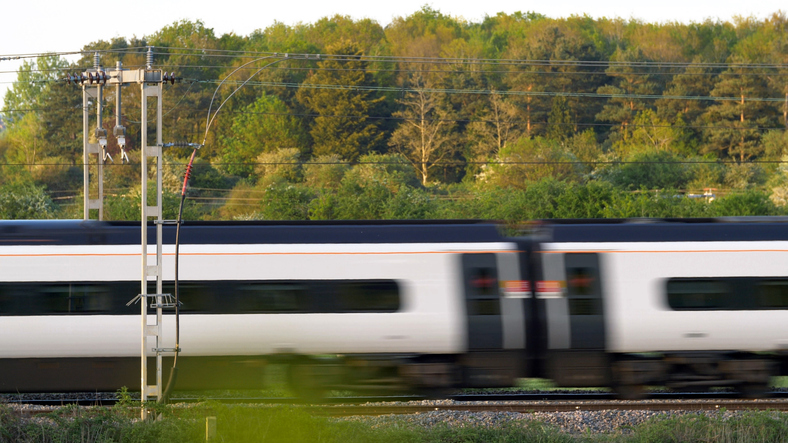
Informazioni sul treno
· Name: Siemens Desiro
· Type: Class 185
Tipo di motore
· Cummins QSK19 R
· Horsepower: 750hp
· Displacement: 19Litre
Ore di funzionamento medie del motore
· 12 hours per day (7 days a week)
At the end of the trial in October 2024, the engines had operated for 7202 hours equating to 245,495 miles.
I vantaggi
Due to use of ES Compleat OAT, Siemens experienced an overall maintenance materials saving per annum of approximately 55%.
The lack of requirement to test the coolant or to top it up with additives meant a reduction in both consumable and training costs. But the biggest difference (and therefore, savings) came from the fact that ES Compleat OAT lasts the life of an engine.
“We anticipate that the Fleetguard OAT coolant will provide a service life of five years in this fleet of engines. In fact, 35% of the overall savings were directly attributable to a decrease in coolant purchasing requirements.”
A further benefit of a reduction in coolant change frequency means less waste material entering the supply chain.
“We are impressed with the outcome of the trial and the savings we have achieved,” says Platt. “We are confident that coolant quality is under tighter control and looking forward to rolling out the use of ES Compleat OAT on the whole fleet in 2026.”
Atmus Senior Technical Support Specialist, Paul Louwe, commented, “We develop superior technologies to anticipate the needs of our customers. As well as applying a solutions mindset, we foster long-term partnerships to get to the heart of the issues our customers are facing.”
Informazioni su ES Compleat® OAT
Organic Acid Technology (OAT) coolants use slow-to-deplete organic acid inhibitors, allowing for much longer intervals between changes – typically five years or 1,000,000 miles/1,600,000 km. Fleetguard® ES Compleat® OAT is free of nitrite, amine, phosphate and silicate (NAPS-free) which prevents the formation of harmful deposits and gels, which can lead to corrosion and liner pitting, and offers excellent compatibility with modern engine materials, especially aluminum, as well as gaskets, elastomers and other non-metallics in the engine.
Available in concentrate and 50/50 premix, this versatile coolant is compatible with all other antifreeze and coolant and suitable for all diesel, gasoline and natural gas engines. It is also recommended for Battery Electric Vehicles.
Learn more here https://www.fleetguard.com/coolants-and-chemicals
©2026 Atmus Filtration Technologies Inc. All rights reserved. Fleetguard® and ES Compleat® are registered trademarks owned by Atmus Filtration Technologies Inc. or its subsidiaries.