
Un operador minero en Serbia estaba experimentando un problema crítico: la vida útil de la bomba de combustible y del inyector había caído a un 50 % por debajo de los niveles esperados, lo que puso una presión significativa sobre los costos de mantenimiento y la rentabilidad general.
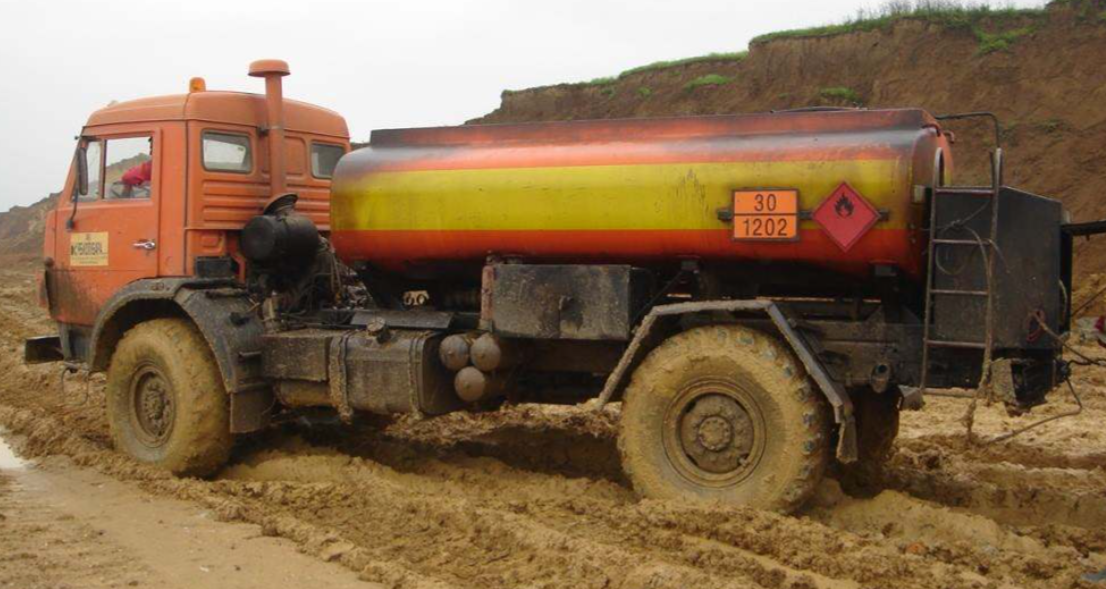
Con un consumo de diésel de aproximadamente 90,000 litros por semana, incluso pequeñas ineficiencias se estaban amplificando en toda la operación. El combustible se almacenó en un tanque a granel y se distribuyó diariamente a través de un camión cisterna móvil, pero una evaluación del sitio reveló rápidamente un riesgo clave: no había filtración en ninguna de las etapas.
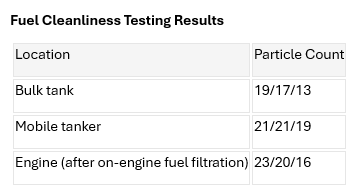
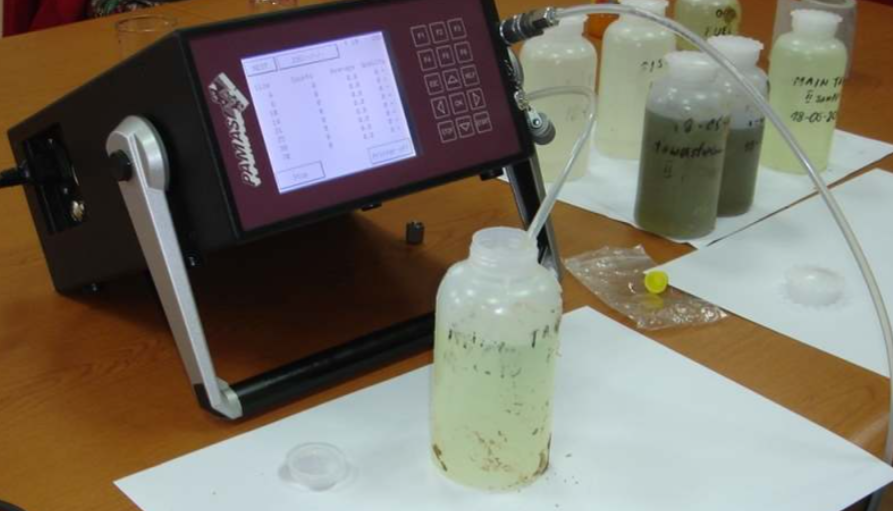
El muestreo de combustible confirmó el impacto: los niveles de contaminación aumentaron progresivamente durante todo el proceso de manipulación, alcanzando niveles altamente dañinos al momento en que el combustible ingresó al motor.
En el punto de inyección, la limpieza del combustible se había degradado a 23/20/16, en comparación con la norma ISO 4406 recomendada de 12/9/6 , un nivel requerido para proteger los sistemas de combustible modernos de alta presión. Esta brecha expuso los componentes críticos al desgaste acelerado, impulsando directamente las fallas prematuras que se observan.
Más allá de la contaminación durante la manipulación, se descubrieron más riesgos dentro del sistema de filtración en sí. Se había instalado un recipiente separador no genuino sin drenaje en el filtro de combustible primario Fleetguard FH234 , lo que evita la eliminación de agua y residuos. Esto permitió que los contaminantes se acumularan y fluyan directamente al sistema de combustible.
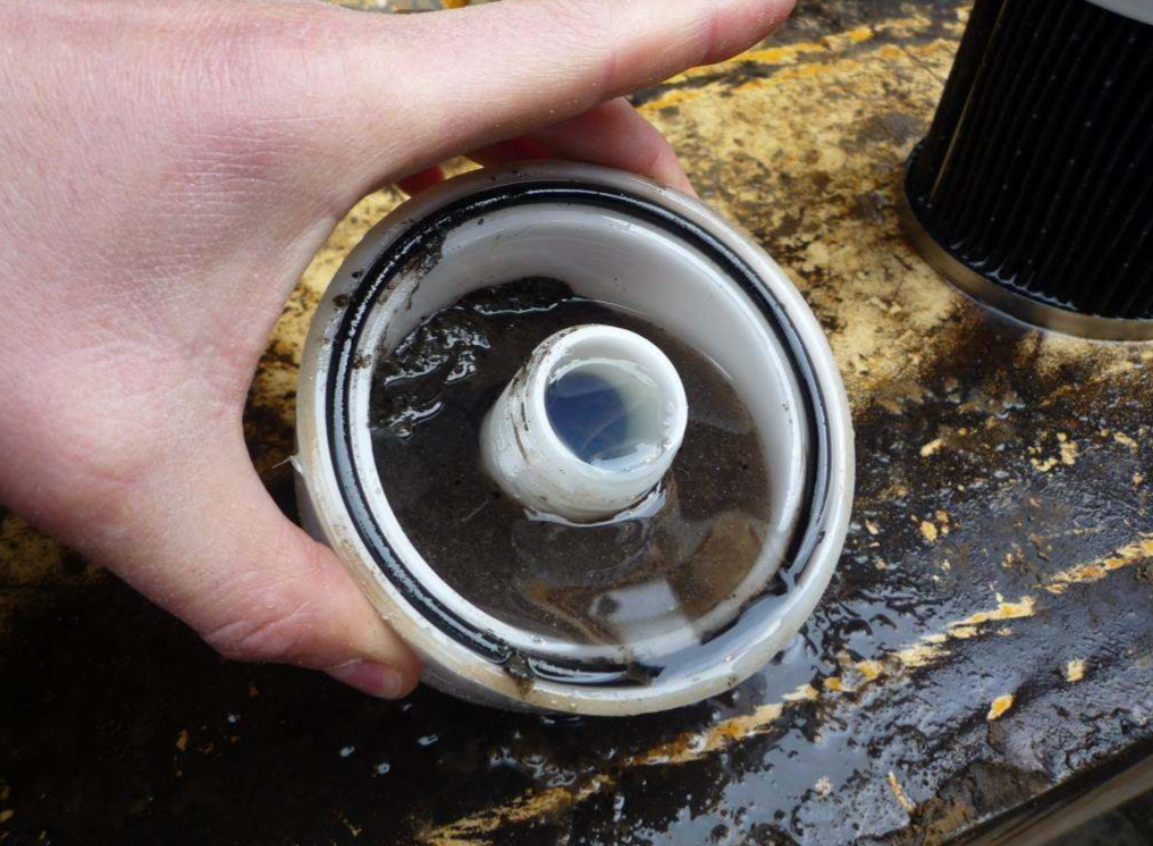
Al mismo tiempo, un filtro no genuino en el motor había reemplazado al Fleetguard FF5644 especificado, lo que debilitaba la línea final de defensa para los componentes críticos de inyección de combustible.
Juntos, estos problemas crearon una tormenta perfecta, la mala calidad del combustible que ingresa al sistema, combinada con una protección de filtración reducida, lo que dio como resultado un mayor desgaste, tiempo de inactividad no planificado y costos operativos más altos.
La solución
El equipo técnico de Fleetguard implementó una solución integral dirigida centrada en eliminar los riesgos de contaminación y restaurar la protección del sistema.
La acción inmediata entregó victorias rápidas:
- Se reincorporó un recipiente separador FH234 genuino, lo que permitió la eliminación diaria de agua y residuos
- Se reintrodujo el filtro Fleetguard FF5644 correcto para restaurar la protección de referencia
- Se recomendó una actualización del filtro FF5782 para prolongar aún más la vida útil de los componentes y mejorar la confiabilidad general del sistema
Al mismo tiempo, las mejoras en los procesos del sitio garantizaron ganancias de rendimiento a largo plazo:
- El camión cisterna móvil se limpió y se colocó en un programa de mantenimiento estructurado
- El personal recibió capacitación sobre las mejores prácticas para evitar la contaminación durante el reabastecimiento
- La filtración de la etapa 0 se introdujo en el tanque de almacenamiento a granel y el camión cisterna móvil para detener los contaminantes en la fuente
- Se recomendaron respiraderos de aire para eliminar el ingreso de suciedad en los tanques
Explore las mejores prácticas para la limpieza del combustible.
Los beneficios
Al abordar la contaminación en cada etapa del proceso de distribución de combustible, el operador pudo reducir significativamente el riesgo en toda su flota.
Los resultados clave incluyeron:
- Vida útil extendida de los componentes: la limpieza mejorada del combustible protege las bombas y los inyectores del desgaste prematuro
- Costos de mantenimiento reducidos: menos fallas e intervalos de servicio más largos
- Tiempo de actividad mejorado: rendimiento de equipos más confiables en un entorno exigente y con alto nivel de polvo
- Control operativo más sólido: mejores procesos y estándares de filtración en todo el sitio
- Sin gastos innecesarios: muchas mejoras se lograron a través de cambios en el proceso en lugar de costos adicionales
Es importante destacar que la solución fue más allá de una solución a corto plazo. Al identificar brechas tanto en el equipo como en las prácticas operativas, Fleetguard ayudó al cliente a desarrollar un enfoque de gestión de combustible más resiliente y eficiente.
Aunque el operador se había alejado de las piezas genuinas, regresó a Fleetguard cuando surgieron problemas de rendimiento, lo que reforzó la posición de la marca como socio técnico de confianza. La resolución exitosa no solo restauró el rendimiento del sistema, sino que también fortaleció la confianza tanto en los productos como en la asociación a largo plazo.
Como resultado, el cliente se comprometió a realizar auditorías de filtración continuas, lo que garantiza un rendimiento sostenido, un combustible más limpio y una alineación continua con las mejores prácticas de la industria.
Comience a optimizar su sistema de combustible hoy mismo y obtenga más información sobre las tecnologías de filtración de combustible Fleetguard.
*ISO 4406 12/9/6 en más detalle
Los motores modernos de riel común de alta presión (HPCR) requieren diésel con recuentos de partículas tan bajos como 12/9/6, lo que protege a los inyectores de tolerancias tan ajustadas como 2-5 micrones.
El código se evalúa en tres tamaños de partículas (en micrones, ≥ 4 μm, ≥ 6 μm, ≥ 14 μm).
De acuerdo con la 4406:1999 norma ISO, los niveles designados corresponden a los siguientes rangos de recuento de partículas por mililitro de fluido:
12 = 20 a 40 partículas (tamaño ≥ 4 μm)
9 = 2.5 a 5 partículas (tamaño ≥ 6 μm)
6 = 0.32 a 0.64 partículas (tamaño ≥ 14 μm)
©2026 Atmus Filtration Technologies Inc. Todos los derechos reservados. Fleetguard® y ES Compleat® son marcas comerciales registradas propiedad de Atmus Filtration Technologies Inc. o sus subsidiarias.
Aviso importante
Toda la información incluida en el presente documento es solo para fines informativos. Esta información es general y puede diferir de la información basada en las condiciones reales. No obstante, la información presentada en este documento es precisa según el leal saber y entender de Atmus. Sin embargo, diversos factores pueden afectar el desempeño del o de los anticongelantes en una aplicación específica, algunos de los cuales están exclusivamente bajo su conocimiento y control. Tenga en cuenta que las propiedades físicas pueden variar según determinadas condiciones y que, si bien las condiciones de operación descritas en este documento tienen como objetivo mejorar el rendimiento del motor y generar ahorros de costos, los resultados finales dependerán de las circunstancias reales de operación. Es su responsabilidad determinar si se requieren pruebas o información adicionales y si estos anticongelantes son aptos para un propósito particular y adecuados para su aplicación específica.
LA INFORMACIÓN SE PROPORCIONA CON LA CONDICIÓN DE QUE LAS PERSONAS QUE LA RECIBAN TOMEN SU PROPIA DETERMINACIÓN EN CUANTO A SU IDONEIDAD PARA SU USO. EN NINGÚN CASO ATMUS FILTRATION TECHNOLOGIES INC, NI NINGUNA DE SUS SUBSIDIARIAS, SERÁ RESPONSABLE DE DAÑOS, RESPONSABILIDADES O LA OBTENCIÓN DE RESULTADOS ESPECÍFICOS DE CUALQUIER NATURALEZA QUE SURJAN DEL USO O LA CONFIANZA EN LA INFORMACIÓN QUE FIGURA EN ESTE DOCUMENTO.
ATMUS FILTRATION TECHNOLOGIES INC, INCLUIDA CUALQUIERA DE SUS SUBSIDIARIAS, NO REALIZA DECLARACIONES NI GARANTÍAS, YA SEAN EXPRESAS O IMPLÍCITAS, INCLUIDAS, ENTRE OTRAS, GARANTÍAS DE COMERCIABILIDAD, IDONEIDAD PARA UN PROPÓSITO PARTICULAR O CUALQUIER OTRA NATURALEZA EN VIRTUD DEL PRESENTE DOCUMENTO CON RESPECTO A LA INFORMACIÓN O LOS PRODUCTOS A LOS QUE SE REFIERE LA INFORMACIÓN.
LIMITACIÓN DE RESPONSABILIDAD
Atmus Filtration Technologies Inc., y sus subsidiarias, no serán responsables de ninguna pérdida o daño que surja del uso de los Productos/Filtros/Sistemas, ya sean directos, indirectos, especiales, incidentales o consecuentes, independientemente de la teoría legal afirmada, incluida la garantía, el contrato, la negligencia o la responsabilidad estricta.